For homeowners who rely on a private well, routine care can make a meaningful difference in system performance and equipment life. Although professional inspections and repairs are essential when problems occur, homeowners can also take several practical steps to help protect their well, pump, pressure tank, and water quality between service visits.
Paying attention to small changes can help identify developing problems before they become costly repairs or lead to a complete loss of water.
Watch for Changes in Water Pressure
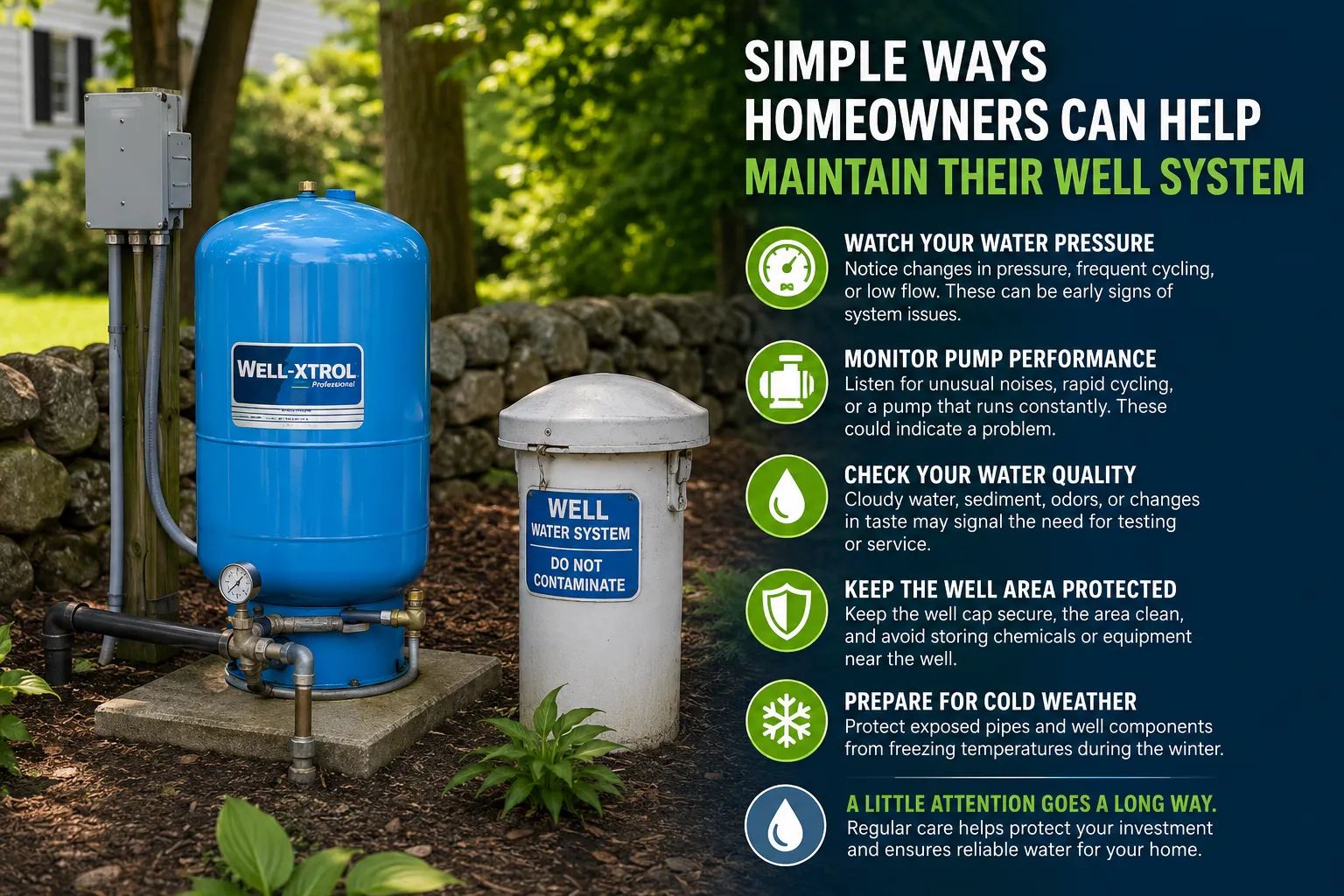
Changes in water pressure are among the most common signs that a private well system may need attention.
Warning signs can include:
- Consistently low water pressure
- Pressure that rises and falls during use
- Weak flow from faucets or showers
- Pressure drops when multiple fixtures are running
- A pump that turns on and off more frequently than usual
These symptoms may be related to the well pump, pressure tank, pressure switch, clogged filters, plumbing restrictions, or another system component.
Ignoring pressure problems can cause the system to work harder than necessary. Over time, that added strain may reduce efficiency and shorten the life of the pump and related equipment.
Pay Attention to Well Pump Operation
A properly functioning well pump should provide dependable water without running continuously or cycling excessively.
Contact a professional if you notice:
- The pump running for unusually long periods
- Rapid or frequent pump cycling
- Unfamiliar noises near the tank or controls
- Difficulty building or maintaining pressure
- A sudden loss of water
- Breakers or controls repeatedly tripping
Frequent cycling can place unnecessary wear on the pump motor and electrical components. A professional evaluation can help determine whether the issue involves the pump, pressure tank, controls, water level, or another part of the system.
Monitor Changes in Water Quality
Homeowners should also pay attention to changes in the appearance, smell, or taste of their water.
Potential warning signs include:
- Cloudy or discolored water
- Sand, grit, or sediment
- Metallic or unpleasant tastes
- Unusual odors
- Rust-colored or mineral staining
- Sudden changes in water clarity
These changes may be connected to the well, groundwater, plumbing, water heater, or filtration equipment. Water testing can help identify the cause and determine whether treatment or system service is needed.
Because water quality can change over time, periodic testing is an important part of private well maintenance.
Keep the Well Area Clean and Accessible
The area surrounding the well should remain clear, visible, and protected.
Homeowners should:
- Keep the well cap secure and undamaged
- Avoid piling soil, mulch, or debris around the well
- Keep landscaping from blocking access
- Avoid storing fuel, fertilizer, pesticides, or chemicals nearby
- Prevent vehicles or heavy equipment from damaging the well area
- Maintain clear access for inspections and service
A damaged or improperly sealed well cap may allow insects, debris, surface water, or other contaminants to enter the system. If the cap is loose, cracked, or missing, it should be inspected promptly.
Protect the System From Freezing
Cold New England winters can create problems for exposed pipes and water system components. Before freezing temperatures arrive, inspect areas where plumbing or equipment may be vulnerable.
Pay particular attention to:
- Exposed pipes
- Unheated crawl spaces
- Exterior plumbing
- Well houses or utility enclosures
- Pressure tanks located in cold areas
- Openings that allow cold air to reach plumbing
Insulating exposed components and sealing drafts can help reduce the risk of frozen pipes and interrupted water service.
Never use an open flame to thaw frozen plumbing. If a pipe or well component freezes, contact a qualified professional for assistance.
Know Where Your Well System Controls Are Located
Homeowners should know the location of the well pump breaker, pressure tank, pressure switch, shutoff valves, and other key components.
This information can be useful during a leak, loss of water, or other urgent situation. It also allows service technicians to access the system more efficiently.
Keep the equipment area free from storage and make sure electrical panels, controls, and tanks are easy to reach.
Schedule Service When Warning Signs Appear
Small changes in pressure, pump operation, water quality, or system performance should not be ignored. These early warning signs often provide valuable clues that a well or pump system needs professional attention.
Call for service if you experience:
- No water
- Persistent low pressure
- Frequent pump cycling
- Unusual pump noises
- Visible leaks
- Sediment or discoloration
- Sudden water quality changes
- An unexplained increase in electricity use
Addressing a problem early may help prevent additional damage and reduce the likelihood of an unexpected breakdown.
Protect Your Private Well System
A private well system is a long-term investment and an essential part of the property. Routine observation, basic preventive care, and timely professional service can help extend equipment life and maintain dependable water flow.
By watching for common warning signs, protecting the well area, preparing for cold weather, and scheduling service when needed, homeowners can help keep their water systems operating reliably.
Richardson Wells & Pumps provides well inspections, pump service, pressure tank replacement, water system troubleshooting, water filtration, and maintenance support throughout Central and Eastern Massachusetts, Rhode Island, and Northern Connecticut.
Contact Richardson Wells & Pumps if you have concerns about your well, pump, pressure tank, water pressure, or water quality.
Posted by jcorapi on 05/30/2026